Synopsis of some of the most popular classical music compositions prepared for Internet radio's "a MUSIClassical Concert" at www.theClassicStation.com and www.ClassicalMusic.network
Spartacus (Russian: «Спартак», Spartak) is a ballet by Aram Khachaturian (1903–1978). The work follows the exploits of Spartacus, the leader of the slave uprising against the Romans known as the Third Servile War, although the ballet's storyline takes considerable liberties with the historical record. Khachaturian composed Spartacus in 1954, and was awarded a Lenin Prize for the composition that same year. It was first staged, with choreography by Leonid Yakobson, in Leningrad 1956, but only with qualified success since Yakobson abandoned conventional pointe in his choreography. The ballet received its first staging at the Bolshoi Theatre, Moscow in 1958, choreographed by Igor Moiseyev; however it was the 1968 production, choreographed by Yury Grigorovich, which achieved the greatest acclaim for the ballet. It remains one of Khachaturian's best known works and is prominent within the repertoires of the Bolshoi Theatre and other ballet companies in Russia and the former Soviet Union.
WIKIPEDIA
VIDEO: The Bolshoi Ballet and Orchestre Colonne ...
Gian Carlo Menotti (pronounced [dʒan ˈkarlo meˈnɔtːi]; July 7, 1911 – February 1, 2007) was an Italian-American composer and librettist. Although he often referred to himself as an American composer, he kept his Italian citizenship. He wrote the classic Christmas opera Amahl and the Night Visitors, along with over two dozen other operas intended to appeal to popular taste.
He won the Pulitzer Prize twice, for The Consul (1950) and for The Saint of Bleecker Street (1955). He founded the noted Festival dei Due Mondi (Festival of the Two Worlds) in Spoleto in 1958 and its American counterpart, Spoleto Festival USA, in 1977. In 1986 he commenced a Melbourne Spoleto Festival in Australia, but he withdrew after three years.
Menotti died on February 1, 2007, at the age of 95 in a hospital in Monte Carlo, Monaco, where he had a home. He was buried in East Lothian, Scotland. SEBASTIAN Description by Joseph Stevenson
Menotti composed this ballet score to his own libretto in 1944. The choreography of the original production was considered unsuccessful, but with restagings later it became a success. Sebastian is a Moorish slave, secretly in love with a courtesan. She, in her turn, shares love with the Prince of their Italian kingdom. The prince's sisters, desiring to end the affair, steal the courtesan's veil, which allows them to work black magic on her, which they can do with a life-sized wax figure covered with the veil; firing arrows into it will kill her. Sebastian learns of the plot, substitutes himself for the wax figure, and is shot with the arrows. The sacrifice breaks their spell over the courtesan, and she is reunited with her beloved. Menotti's music is ardent and romantic, sort of an Italian Prokofiev in style and sound. It is very listenable, a fine score of its type. There is a suite in seven movements drawn from the score.
VIDEO: Menotti: Sebastian Suite, conducted by Stokowski (1954)
Menotti: Sebastian - Ballet Suite (1944)
NBC Symphony Orchestra conducted by Leopold Stokowski
Recorded September 28, 1954, in Manhattan Center, New York City. Issued in April 1955 as Side 2 of RCA Victor Red Seal LM-1858 (coupled with Morton Gould's Dance Variations). The recording was actually also made in stereo, but unreleased as such until 1978, when it surfaced as RCA Gold Seal AGL1-2715 (coupled with selections from Prokofiev's "Romeo and Juliet" ballet score).
Two different cover designs were used for LM-1858 - the original, of 1955, gives the Gould work top billing, and the reissue cover, from 1958, gives top billing to the Menotti instead. Both are reproduced in this video. My copy of LM-1858 has the revised cover; my thanks to Buster, at Big 10-Inch Record (big10inchrecord.blogspot.com), for providing me with a scan of the original design.
Menotti's "Sebastian" Suite is in seven sections, played without pause:
1. Adagio
2. Barcarolle (at 2:12)
3. Street Fight (at 5:43)
4. Cortège (at 7:08)
5. Sebastian's Dance (at 11:54)
6. The Courtesan's Dance (at 15:10)
7. Pavane (at 19:07)
The Sea, H.100 is an orchestral suite written in 1910–11 by Frank Bridge. It is also described as a symphonic tone poem. It lasts about 22 minutes.
Bridge completed the work in July 1911, while staying at the Sussex coastal town of Eastbourne. This was the same place where Claude Debussy had finished his own musical evocation of the sea, the symphonic poem La mer (The Sea), in 1905. Bridge was to die at Friston near Eastbourne in 1941.
The Sea received its first performance at a Prom Concert in London on 24 September 1912, with the New Queen's Hall Orchestra conducted by Sir Henry Wood.
The composer himself conducted the Cleveland Orchestra, Detroit Symphony and Boston Symphony premieres after the First World War.
Bridge also conducted a recording of the suite. Later recordings have been conducted by Sir Charles Groves, Vernon Handley and Richard Hickox.
1. Seascape: Allegro ben moderato
"Seascape paints the sea on a summer morning. From high drifts is seen a great expanse of waters lying in the sunlight. Warm breezes play over the surface."
2. Sea Foam: Allegro vivo
"Sea-foam froths among the low-lying rocks and pools on the shore, playfully not stormy."
3. Moonlight: Adagio non troppo
"A calm sea at night. The first moonbeams are struggling to pierce through dark clouds, which eventually pass over, leaving the sea shimmering in full moonlight."
4. Storm: Allegro energico – Allegro moderato e largamente
"Wind, rain and tempestuous seas, with the lulling of the storm an [allusion] to the first number is heard and which may be regarded as the sea-lover's dedication to the sea."
WIKIPEDIA
Sylvia, originally Sylvia, ou La nymphe de Diane, is a full-length ballet in two or three acts, first choreographed by Louis Mérante to music by Léo Delibes in 1876. Sylvia is a typical classical ballet in many respects, yet it has many interesting features that make it unique. Sylvia is notable for its mythological Arcadian setting, creative choreographies, expansive sets and, above all, its remarkable score.
The ballet's origins are in Tasso's 1573 play Aminta, which provides the basic plot of Delibes' work. Jules Barbier and Baron de Reinach adapted this for the Paris Opera. The piano arrangement was composed in 1876 and the orchestral suite was done in 1880. When Sylvia premièred on Wednesday, June 14, 1876, at the Palais Garnier, it went largely unnoticed. In fact, the first seven productions of Sylvia were not commercially successful. It was the 1952 revival, choreographed by Sir Frederick Ashton, that popularized the ballet. Ashton's success set the stage for the 1997, 2004, 2005 and 2009 productions, all of which were based on his 1952 choreography.
WIKIPEDIA
VIDEO:
Sylvia is available to watch in full now with Digital Theatre Collections.
Explore the Royal Opera House Collection now at http://bit.ly/1aAa9eM
Digital Theatre is delighted to present a selection of productions originally staged and filmed at the iconic Royal Opera House, Covent Garden.
Darcey Bussell and Roberto Bolle star in Frederick Ashton's Sylvia, restored to the splendour of its elegant and opulent three-act form for the 75th anniversary celebrations of The Royal Ballet.
Samson and Delilah (French: Samson et Dalila), Op. 47, is a grand opera in three acts and four scenes by Camille Saint-Saëns to a French libretto by Ferdinand Lemaire. It was first performed in Weimar at the Grossherzogliches (Grand Ducal) Theater (now the Staatskapelle Weimar) on 2 December 1877 in a German translation.
The opera is based on the Biblical tale of Samson and Delilah found in Chapter 16 of the Book of Judges in the Old Testament. It is the only opera by Saint-Saëns that is regularly performed. The second act love scene in Delilah's tent is one of the set pieces that define French opera. Two of Delilah's arias are particularly well known: "Printemps qui commence" and "Mon cœur s'ouvre à ta voix" ("My heart opens itself to your voice", also known as "Softly awakes my heart"), the latter of which is one of the most popular recital pieces in the mezzo-soprano/contralto repertoire.
WIKIPEDIA
VIDEO:
UMASS University Orchestra
February 5, 2010 Matthew Bertuzzi - Conductor
Saint-Saëns - Bacchanal from Samson and Delilah
Drew University Concert Hall
Antonín Dvořák's Symphonic Variations on an Original Theme (Czech: Symfonické variace) for orchestra, Op. 78, B. 70, were written in 1877. They are played fairly commonly, much like Johannes Brahms's Variations on a Theme by Haydn and Edward Elgar's Enigma Variations. They are often recorded in conjunction with his nine symphonies.
WIKIPEDIA
Symphonie fantastique: Épisode de la vie d'un artiste ... en cinq parties (Fantastical Symphony: An Episode in the Life of an Artist, in Five Parts) Op. 14 is a program symphony written by the French composer Hector Berlioz in 1830. It is an important piece of the early Romantic period, and is popular with concert audiences worldwide. The first performance was at the Paris Conservatoire in December 1830.
Leonard Bernstein described the symphony as the first musical expedition into psychedelia because of its hallucinatory and dream-like nature, and because history suggests Berlioz composed at least a portion of it under the influence of opium. According to Bernstein, 'Berlioz tells it like it is. You take a trip, you wind up screaming at your own funeral.'
In 1831, Berlioz wrote a lesser known sequel to the work, Lélio, for actor, orchestra and chorus. Franz Liszt made a piano transcription of the symphony in 1833 (S.470).
WIKIPEDIA
VIDEO: Berlioz: Symphonie fantastique (complete performance) Chicago Symphony Orchestra
Dvorak's Scherzo Capriccioso, Op. 66 was composed in the year 1883. Premiered by National Theatre Orchestra, conducted by Adolf Čech. Despite its name, which suggests that it is a work cheerful and playful nature, the Scherzo capriccioso strongly represents a period in his life of some internal crisis whose cause has not yet been satisfactorily clarified. Perhaps it was caused by the emotional upheaval that Dvorak experienced in connection with the death of his mother on the 15th of December in 1882. This period of the composer's life, includes, among other things his work on the dramatic seventh symphony and his Piano Trio in F minor. VIDEO: Round Top Festival Institute
Saturday June 28, 2014
Festival Concert Hall
The Dance of the Seven Veils is a term used to refer to the dance performed by Salome before Herod Antipas. It is an elaboration on the biblical story of the execution of John the Baptist, which refers to Salome dancing before the king, but does not give the dance a name.
The name "Dance of the Seven Veils" originates with Oscar Wilde's 1891 play Salome in the stage direction “[Salome dances the dance of the seven veils.]”. The dance was also incorporated into Richard Strauss's opera Salome. Wilde's choice of title for the dance has been linked to the popularity of orientalist "veil dances" in the period and to the emergence of striptease acts.
Salome, Op. 54, is an opera in one act by Richard Strauss to a German libretto by the composer, based on Hedwig Lachmann's German translation of the French play Salomé by Oscar Wilde. Strauss dedicated the opera to his friend Sir Edgar Speyer.
The opera is famous (at the time of its premiere, infamous) for its "Dance of the Seven Veils". The final scene is frequently heard as a concert-piece for dramatic sopranos.
WIKIPEDIA
VIDEO: Richard Strauss - SALOME
Salome : Erika Sunnegårdh
Dance of the Seven Veils
The Slavonic Dances (Czech: Slovanské tance) are a series of 16 orchestral pieces composed by Antonín Dvořák in 1878 and 1886 and published in two sets as Opus 46 and Opus 72 respectively. Originally written for piano four hands, the Slavonic Dances were inspired by Johannes Brahms's own Hungarian Dances and were orchestrated at the request of Dvořák's publisher soon after composition. The pieces, lively and full of national character, were well received at the time and today are among the composer's most memorable works, occasionally making appearances in popular culture.
The Op. 46 set is listed in the Burghauser catalogue as B.78 in the original piano four hand version, and as B.83 in the orchestral version. The Op. 72 set is catalogued as B.145 in the piano four hand version, and as B.147 in the orchestral version.
WIKIPEDIA
The Slavonic Dances (Czech: Slovanské tance) are a series of 16 orchestral pieces composed by Antonín Dvořák in 1878 and 1886 and published in two sets as Opus 46 and Opus 72 respectively. Originally written for piano four hands, the Slavonic Dances were inspired by Johannes Brahms's own Hungarian Dances and were orchestrated at the request of Dvořák's publisher soon after composition. The pieces, lively and full of national character, were well received at the time and today are among the composer's most memorable works, occasionally making appearances in popular culture.
The Op. 46 set is listed in the Burghauser catalogue as B.78 in the original piano four hand version, and as B.83 in the orchestral version. The Op. 72 set is catalogued as B.145 in the piano four hand version, and as B.147 in the orchestral version.
Manuscript is dated 1740.
The Sinfonia in G major, RV 149, is one of the few manuscript works that can be tied to a time and place. On March 21, 1740, the Ospedale della Pietà put on a lavish entertainment in honor of prince-elector Frederick Christian, whose father was Elector of Saxony and King of Poland. Such tributes in honor of important foreigners were not uncommon in Venice; there were three of them for Frederick Christian that spring, each presenter trying to outdo the others. The city’s days as a great maritime power were long past, and tourism was a big part of its economy, so it was good business and good politics to be on good terms with everyone. It was particularly good business for the Ospedale, a school and home for orphaned and illegitimate girls that Vivaldi served, on and off, for most of his life as teacher or music director. High-profile concerts for foreign princes increased the fame of the Ospedale’s music, which boosted its finances.
VIDEO: UNC Lab Orchestra Concert:
11/10/13, Hill Hall, UNC
Vincent Povázsay, Conductor
Antonín Dvořák's Serenade for Strings in E major (Czech: Smyčcová serenáda E dur), Op. 22, was composed in just two weeks in May 1875. It remains one of the composer's more popular orchestral works to this day.
1875 was a fruitful year for Dvořák, during which he wrote his Symphony No. 5, String Quintet No. 2, Piano Trio No. 1, the opera Vanda, and the Moravian Duets. These were happy times in his life. His marriage was young, and his first son had been born. For the first time in his life, he was being recognized as a composer and without fear of poverty. He received a generous stipend from a commission in Vienna, which allowed him to compose his Fifth Symphony and several chamber works as well as the Serenade.
Dvořák is said to have written the Serenade in just 12 days, from 3–14 May. The piece was premiered in Prague on 10 December 1876 by Adolf Čech and the combined orchestras of the Czech and German theatres. It was published in 1877 in the composer's piano duet arrangement by Emanuel Starý in Prague. The score was printed two years later by Bote and Bock, Berlin.
WIKIPEDIA
VIDEO: Dvořák's Serenade For Strings in E major Op. 22, as performed at RNCM Strings Day 2013 by the RNCM String Ensemble
"Sensemayá" is a poem by the Cuban poet Nicolás Guillén. Guillén's poem evokes a ritual Afro-Caribbean chant performed while killing a snake. It inspired an orchestral work of the same title by the Mexican composer Silvestre Revueltas. It is one of Revueltas's most famous compositions. Revueltas first set the poem to music in Mexico City in 1937, originally for small orchestra. In 1938, he expanded it into a full-scale orchestral work.
WIKIPEDIAVIDEO: Hobart Earle conducts the Odessa Philharmonic Orchestra in a performance of "Sensemayá" in the Odessa Opera House (July 2012)
Sinfonía de Antígona (Antigone Symphony) is Carlos Chávez's Symphony No. 1, composed in 1933. The music originated as theatre music to accompany the tragedy of Antigone, hence the title of the symphony. The material was reworked into a single movement and rescored for a large orchestra. It lasts about 11 minutes in performance. The Sinfonía de Antígona originated from the incidental music Chávez composed for a production of Jean Cocteau's adaptation of Sophocles' tragedy Antigone, given by the group Teatro Orientación at the Palacio de Bellas Artes in Mexico City in 1932. Chávez re-shaped some of the musical materials and orchestrated the result as his First Symphony. It was premiered in Mexico City under the composer's baton on 15 December 1933 (Slonimsky 1945, 233–34; Orbón 1987c, 79). Two movements of the original theatre music, for a chamber ensemble of seven players, was eventually published by the composer's estate as Antígona, apuntes para la Sinfonía (Antigone, sketches for the Symphony) (Chávez 2000)
WIKIPEDIA
VIDEO:
Carlos Chávez (1899-1978): Sinfonia No.1 "Sinfonía de Antigona" (1933).
Orquesta Filarmónica de la ciudad de México diretta da Enrique Bátiz.
Symphony No. 4, subtitled Sinfonía romántica (Romantic Symphony) is an orchestral composition by Carlos Chávez, composed in 1953. The score was commissioned by and is dedicated to the Louisville Orchestra, which premiered the work on 11 February 1953, conducted by the composer. After the first few performances, Chávez decided that the final movement, though sound in itself, was not satisfactory as a conclusion to this symphony. Consequently, he composed a new finale in October 1953, and published the original movement as a separate work, titled Baile (cuadro sinfónico) (Dance, Symphonic Picture) (Orbón 1987c, 80).
WIKIPEDIA
VIDEO: Carlos Chávez (1899-1978): Sinfonia n.4 "Sinfonía romántica" (1953).
1. Allegro
2. Molto lento
Royal Philharmonic Orchestra diretta da Enrique Bátiz
Sinfonía india is Carlos Chávez's Symphony No. 2, composed in 1935–36. In a single movement, its sections nevertheless follow the traditional pattern for a three-movement symphony. The title signifies the fact that the thematic material consists of three melodies originating from native-American tribes of northern Mexico. The symphony is Chávez's most popular composition.
The Sinfonía india was begun in December 1935, during the composer's first tour of the United States as a conductor, and finished early in the following year. It was premiered under Chávez's direction in a radio performance by the Columbia Broadcasting Orchestra on 23 January 1936, and given its first concert performance by the Boston Symphony Orchestra conducted by the composer on 10 April 1936. The Mexican premiere took place in the capital on 31 July 1936 (Slonimsky 1945, 234).
This symphony has become immensely popular, and so the primary source of the composer's identity with the public, comparable in this respect with Beethoven's Fifth Symphony and Ravel's Bolero.
VIDEO: SCM Symphony Orchestra
Eduardo Diazmuñoz (cond.)
August 22, 2014
The Symphony in D major "No. 50", K. 161/141a, was composed by Wolfgang Amadeus Mozart in 1772. The first two movements are from the overture to the opera Il sogno di Scipione, K. 126, and the last movement, K. 163, was composed separately. Köchel gave the entire work the number K. 161 (revised to K. 141a in later editions).
WIKIPEDIA
VIDEO: The symphony is set in 3 movements:
1. Allegro moderato (0:00)
2. Andante (2:52)
3. Presto - K 163 (5:20)
Mozart composed a finale (K 163) in Milan in 1772 to add to the first two movements of the overture to Il sogno di Scipione.
Performers: The Academy of Ancient Music, conducted by Christopher Hogwood.
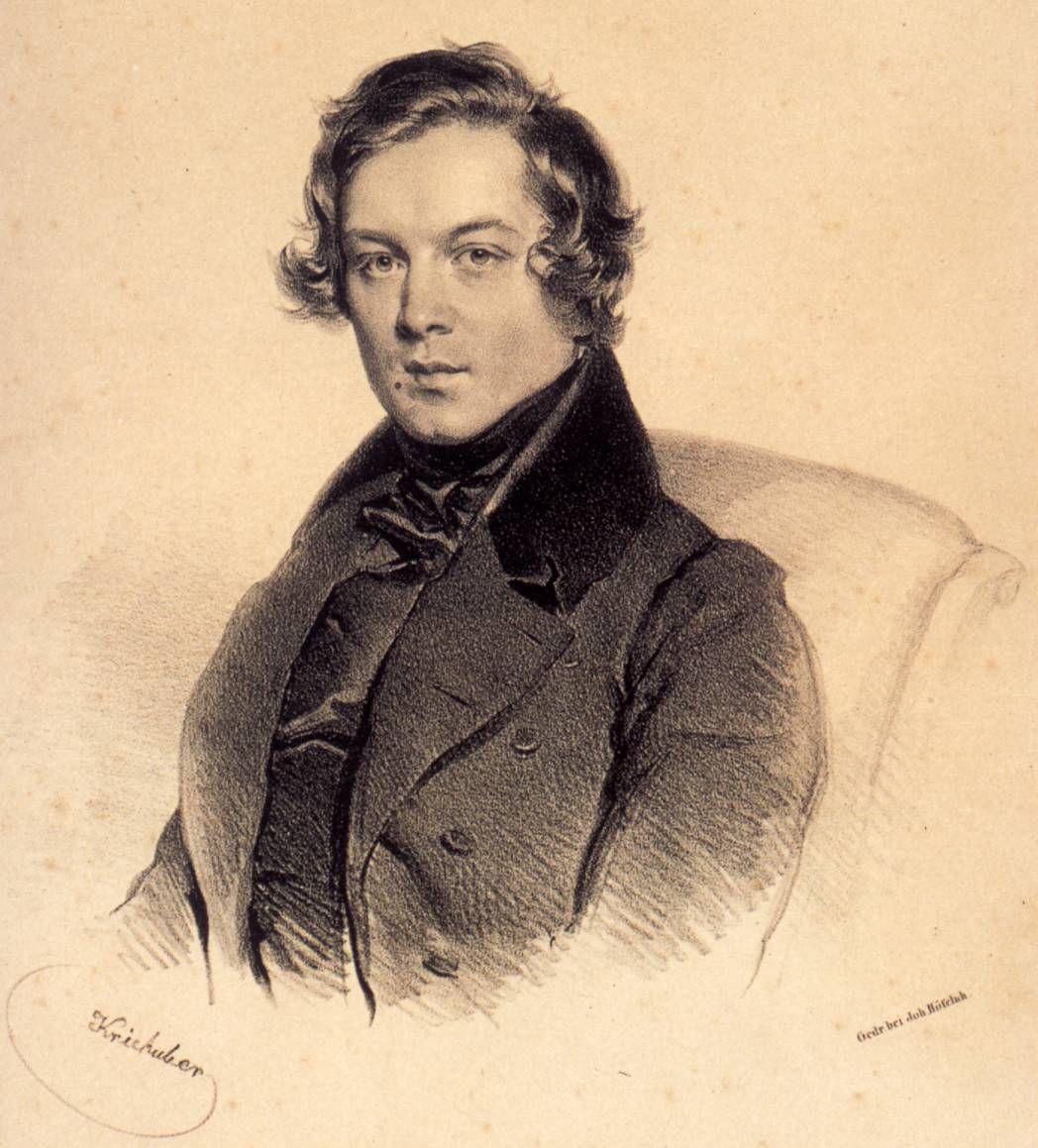
The Symphony No. 1 in B-flat major, Op. 38, also known as the Spring Symphony, is the first symphonic work composed by Robert Schumann. Although he had made some "symphonic attempts" in the autumn of 1840 soon after he married Clara Wieck, he did not compose his First Symphony until early 1841. Schumann sketched the symphony in four days from 23 to 26 January and completed the orchestration by 20 February. The premiere took place under the baton of Felix Mendelssohn on 31 March 1841 in Leipzig, where the symphony was warmly received. Until this symphony, Schumann was largely known for his works for the piano and for voice. Clara encouraged him to write symphonic music. The title of "Spring Symphony" was bestowed upon it, according to Clara's diary, because of the Spring poems of Adolph Boettger. However, Schumann himself said he was merely inspired by his Liebesfrühling (spring of love). The last movement of the symphony also uses the final theme of Kreisleriana, and therefore recalls the romantic and fantastic inspiration of this piano composition.
WIKIPEDIAVIDEO: Robert Schumann Symphony No. 1 in B flat major, Op. 38 Frühlingssinfonie ("Spring")
Leonard Bernstein conducts Wiener Philarmoniker