Showing posts with label SYMPHONIES. Show all posts
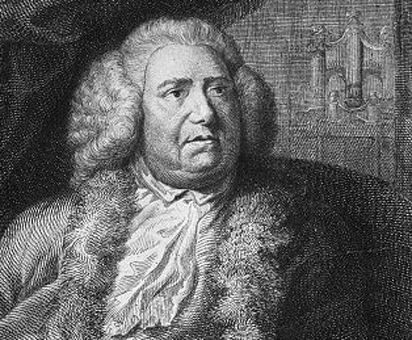
William Boyce (composer) (1711–1779), English-born composer and Master of the King's Musick
William Boyce (baptised 11 September 1711 – d. 7 February 1779) was an English composer and organist. Boyce is known for his set of eight symphonies, his anthems and his odes. Boyce was largely forgotten after his death and he remains a little-performed composer today, although a number of his pieces were rediscovered in the 1930s and Constant Lambert edited and sometimes conducted his works. His only son, also William Boyce (25 March 1764 – 1824), was a professional double bass player.[4] On the 7 February 1779 Boyce died from an attack of gout. He was buried under the dome of St Paul's cathedral. WIKIPEDIA
VIDEO: William Boyce - 8 Symphonies (The English Concert, Trevor Pinnock, 1987)
William Baines - Symphony in C-minor, Op.10 (1917)
VIDEO: Work: Symphony in C-minor, Op.10 (1917) Mov.I 00:00 Mov.II 09:44 Mov.III 20:17 Mov.IV 28:29 Orchestra: Airdale Symphony Orchestra Conductor: George Kennaway.
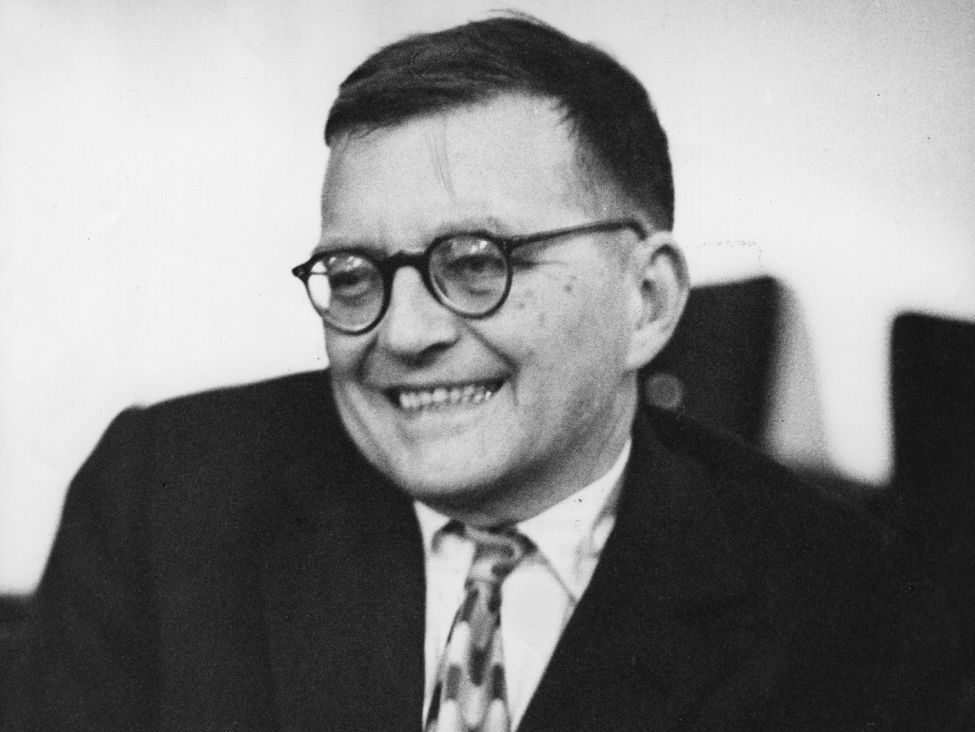
Shostakovich: Symphony No. 11, 'The Year 1905'
WIKIPEDIA
VIDEO: Moscow Philarmonic conductor, Kirill Kondrashin
Shostakovich: Symphony No. 5
VIDEO: Leonard Bernstein with the New York Philharmonic, playing the Symphony No. 5 of Dmitri Shostakovich at a 1979 live perfomance on Bunka Kainan, Tokyo, Japan.
Dmitri Shostakovich: Symphony No.10
WIKIPEDIA
VIDEO: The Orchestra from Theatre Mariinsky Conductor: Valery Gergiev Salle Pleyel, Paris, 2013
Dmitri Shostakovich: Symphony No. 7 Op. 60 "Leningrad" (1942)
VIDEO: Royal Liverpool Philharmonic Orchestra conducted by/Orquesta Filarmónica Real de Liverpool dirigida por Vasily Petrenko... Shostakovich’s Seventh is the best known art music piece of WWII, considering half of it was composed through the siege of Leningrad. It is a work that reflects not only the factual actions of the conflict, but also many of its philosophical principles, if there were any. Likely, these are the reasons for its everlasting place in history.
Symphony No. 5 (Bax)
The Symphony No. 5 by Arnold Bax was completed in 1932 and dedicated to Jean Sibelius. It is in many ways heavily influenced by Sibelius.
WIKIPEDIA | BAX Bio
Sir Arnold Edward Trevor Bax KCVO (8 November 1883 – 3 October 1953) was an English composer, poet, and author. His prolific output includes songs, choral music, chamber pieces, and solo piano works, but he is best known for his orchestral music. In addition to a series of symphonic poems he wrote seven symphonies and was for a time widely regarded as the leading British symphonist. Bax was born in the London suburb of Streatham.
VIDEO: Bryden Thomson, London Philharmonic Orchestra
WIKIPEDIA | BAX Bio
Sir Arnold Edward Trevor Bax KCVO (8 November 1883 – 3 October 1953) was an English composer, poet, and author. His prolific output includes songs, choral music, chamber pieces, and solo piano works, but he is best known for his orchestral music. In addition to a series of symphonic poems he wrote seven symphonies and was for a time widely regarded as the leading British symphonist. Bax was born in the London suburb of Streatham.
VIDEO: Bryden Thomson, London Philharmonic Orchestra
Arthur Butterworth (1923-2014) : Symphony No. 6 (2006)
Arthur Eckersley Butterworth, MBE (4 August 1923, New Moston – 20 November 2014, Embsay)
WIKIPEDIA
VIDEO:
Sir Arnold Bax - Symphony No. 7 (1939)
The Symphony No. 7 in A-flat major by Arnold Bax was completed in 1939 and dedicated to "The People of America". The work received its first performance in Carnegie Hall, New York City, by the New York Philharmonic on 10 June 1939 under the baton of Sir Adrian Boult. It was commissioned by the British Council to be played at the 1939 New York World's Fair, along with Arthur Bliss's Piano Concerto in B-flat, and Ralph Vaughan Williams' Five Variants of Dives and Lazarus.
WIKIPEDIA
BAX BIO
VIDEO: London Philharmonic, Raymond Leppard
WIKIPEDIA
BAX BIO
VIDEO: London Philharmonic, Raymond Leppard
Arthur Butterworth "Symphony No.1"
Arthur Eckersley Butterworth's Symphony No. 1, Op. 15 was completed in 1957. Manchester-born Butterworth enjoyed a stint as an orchestral musician, playing the trumpet in both the Scottish National and Halle orchestras. The First of his four symphonies was first heard at the 1957 Cheltenham Festival under Sir John Barbirolli, though the composer traces its origins back to 1947 when he heard a radio broadcast of Sibelius’s Sixth Symphony. Butterworth candidly admits that the latter piece’s magical opening bars are echoed at the outset of his own symphony.
WIKIPEDIA
VIDEO: Munich Symphony Orchestra, Douglas Bostock (Conductor) This is a hard-to-obtain Classico recording by Douglas Bostock and the Munich Symphony Orchestra of Butterworth's Symphony No.1
Lennox Berkeley: Symphony No.2 (1958)
Lennox Berkeley composed his Symphony No. 2 in 1958. The work was commissioned by the City of Birmingham Symphony, who premiered it under Andrzej Panufnik in February 1959. Berkeley revised the symphony in 1976 for its first recording, by the London Philharmonic under Nicholas Braithwaite.
VIDEO: BBC National Orchestra of Wales, Richard Hickox
.
VIDEO: BBC National Orchestra of Wales, Richard Hickox
.
Bax - Symphony No. 1
The Symphony No. 1 by Arnold Bax was completed in 1922 and dedicated to John Ireland. Its outer movements were based on a Piano Sonata in E-flat that Bax subsequently orchestrated, while the central movement was newly composed for the symphony.
The work is in many ways autobiographical with some music critics suggesting they could find references within the work to the Great War.
WIKIPEDIA | BAX BIO
VIDEO: Royal Scottish National Orchestra - David-Lloyd Jones conductor
WIKIPEDIA | BAX BIO
VIDEO: Royal Scottish National Orchestra - David-Lloyd Jones conductor
Arthur Butterworth (1923-2014) : Symphony No. 4 (1986)
Arthur Butterworth was born in Manchester, UK, in 1923. From early on he was attracted to the sound of the brass band and later entered the Royal Manchester College of Music to study both trumpet and composition. On leaving the college in 1949 he joined the Scottish National Orchestra where he doubled as trumpeter and unofficial assistant conductor. In 1955 he joined the Hallé Orchestra, and in 1962 finally gave up professional playing. His next move was to Skipton in the Yorkshire Dales where he got involved in local musical life. From 1964 to 1993 he conducted the Huddersfield Philharmonic Society, and also forged relationships with some of the BBC orchestras. He died in November 2014.
The initial sketches for the Symphony No. 4 Op. 72 were made as early as 1970, but it was a decade before Butterworth got down to serious work on it. Completed in 1986, the performance here with the BBC Northern Symphony Orchestra and Bryden Thomson was the premiere. The Dutton release I mentioned above contains the recording premiere made in 2008 with Butterworth himself conducting the Royal Scottish National Orchestra. Interestingly, MusicWeb International arranged for a public performance of the work at Warwick Arts Centre in 1998 at the suggestion of Len Mullenger to celebrate the composer’s 75th birthday; the conductor was Colin Touchin (review).
---Stephen Greenbank
VIDEO: Symphony No. 4 (1986) Dir : Bryden Thomson BBC Philharmonic Orchestra
Arnold Bax - Symphony No. 2 (1926)
Sir Arnold Edward Trevor Bax
(8 November 1883 - 3 October 1953)
....was an English composer, poet, and author. His prolific output includes songs, choral music, chamber pieces, and solo piano works, but he is best known for his orchestral music. In addition to a series of symphonic poems he wrote seven symphonies and was for a time widely regarded as the leading British symphonist. Bax completed his Symphony No. 2 in E minor and C major in 1926, after intermittent work for the previous two years. It was dedicated to Sergey Koussevitzky who, after protracted negotiations with Bax, conducted the first two performances in Boston with the Boston Symphony Orchestra on 13th and 14th December 1929. Eugene Gooseens conducted the first London performance with the Queen's Hall Orchestra on 20th May 1930. WIKIPEDIA
VIDEO: Conducted by David Lloyd-Jones with the Royal Scottish National Orchestra.
Sir Arnold Bax - Spring Fire (1913)
Written in 1913 for the 1914 Norwich Festival, Spring Fire is one of the first real program works from Bax's pen. It was dedicated to Henry Wood and although the première was postponed mainly because of the extreme technical difficulty of the piece, it was rescheduled for 1916, only to be cancelled due to a certain unpleasantness then taking place in Europe. Eventually, it was December 1970 before the first performance took place, under the auspices of the Bax Society. It is scored for a typically large orchestra and in the words of the composer's own program note is intended to evoke "...the first uprush and impulse of Spring in the woods."---Description by Tim Mahon
VIDEO: Royal Philharmonic Orchestra & Vernon Handley
I. The Forest Before Dawn - 00:00 II. Daybreak and Sunrise - 3:28 III. Full Day - 7:12 IV. Woodland Love - Romance - 14:37 V. Maenads - 22:57
VIDEO: Royal Philharmonic Orchestra & Vernon Handley
I. The Forest Before Dawn - 00:00 II. Daybreak and Sunrise - 3:28 III. Full Day - 7:12 IV. Woodland Love - Romance - 14:37 V. Maenads - 22:57
Lennox Berkeley: Symphony No.4
British composer Lennox Berkeley was born in 1903 and died in 1989. A contemporary of Walton and Tippett, Lennox Berkeley initially studied modern languages at Oxford University before studying composition with Nadia Boulanger in Paris. There he met and was influenced by Ravel, Poulenc and Stravinsky, and much of his work has a refinement and precision that is distinctly French in flavour. In 1928 he joined the Roman Catholic Church which was to inspire much of his vocal music. He enjoyed a long association with Benjamin Britten, with whom he collaborated on a number of works. In later years, his adoption of serialism marked a darker and more brooding style.
His fourth symphony, composed in 1978, was commissioned by the Royal Philharmonic Orchestra.
WIKIPEDIA
VIDEO: BBC National Orchestra of Wales, Richard Hickox.
WIKIPEDIA
VIDEO: BBC National Orchestra of Wales, Richard Hickox.
Arthur Butterworth Symphony No 2
Arthur Eckersley Butterworth, MBE (4 August 1923, New Moston – 20 November 2014, Embsay) was an English composer, conductor, trumpeter and teacher.
Butterworth was born in New Moston, near Manchester. His father was secretary of the local church choir. His mother played the piano and Butterworth himself sang in the choir. For the grand entrance fee of sixpence, young Butterworth attended Hallé concerts and volunteered for the village brass band who allocated him the trombone. While still a teenager he played with the noted band at Besses o' th' Barn and started taking conducting lessons. While playing with the band, he caught his trombone in tram tracks and, discouraged by the accident, changed to the trumpet.
WIKIPEDIA
When Hallé Orchestra and was planning the celebration of its centenary he was to write a new Symphony for that centenary. Butterworth had almost eight years, 1957 to 1965, to write this work. He noted, I had not realised at that time that the forthcoming 100th season would begin in October 1964 (not 1965!) so I had to get a move on and make sure it was ready in time. The premiere of his Second Symphony was given at Bradford’s St. George’s Hall on Friday October 30 1964.
VIDEO: Arthur Butterworth (1923-2014) (GB)
Symphony No. 2 (1964)
Dir : Arthur Butterworth
BBC Scottish Orchestra
Franz Ignaz Beck (Mannheim, February 20, 1734 – Bordeaux, December 31, 1809) Symphonies, Op 1
Franz Ignaz Beck was a German violinist, composer, conductor and music teacher who spent the greater part of his life in France, where he became director of the Bordeaux Grand Théâtre. Possibly the most talented pupil of Johann Stamitz, Beck is an important representative of the second generation of the so-called Mannheim school. His fame rests on his 24 symphonies that are among the most original and striking of the pre-Classical period. He was one of the first composers to introduce the regular use of wind instruments in slow movements and put an increasing emphasis on thematic development. His taut, dramatic style is also remarkable for its employment of bold harmonic progressions, flexible rhythms and highly independent part writing.
Six Symphonies Op. 1 (Callen 1-6; publ. Paris 1758)
WIKIPEDIA BIO
VIDEO: Franz Ignaz Beck (1734~1809) Sinfonia in E-flat major, Op. 1 No. 4 00:00 I. Allegro assai 02:49 II. Andante 07:02 III. Presto New Zealand Chamber Orchestra / Donald Armstrong
MOZART Symphony No 34, K 338
Symphony No. 34 in C major, K. 338, was written by Wolfgang Amadeus Mozart in 1780, and completed on 29 August.
The work is scored for 2 oboes, 2 bassoons, 2 horns, 2 trumpets, timpani and strings.
Composed in Salzburg and dated August 29, 1780. A second movement - Minuet - was torn from the manuscript.Alfred Einstein advanced a theory in the third edition of the Köchel catalogue that the Minuet K. 409 was written at a later date by the composer for this work. However, there is no proof in the sources to support his thesis
WIKIPEDIA
VIDEO: Performers: The Academy of Ancient Music, conducted by Christopher Hogwood.
WIKIPEDIA
VIDEO: Performers: The Academy of Ancient Music, conducted by Christopher Hogwood.
W. A. Mozart - KV 199 (161b/162a) - Symphony No. 27 in G major ...
Symphony No. 27 in G major, K. 199/161b, is a symphony composed by Wolfgang Amadeus Mozart in April, 1773 at the age of 17. The symphony is scored for 2 flutes, 2 horns, and strings.
Mozart and his father returned from their last stay in Italy in March, 1773...during the time of this composition.
VIDEO: National Chamber Orchestra of Moldova Silvia Tabor, conductor.
Subscribe to:
Posts (Atom)
Popular Posts
-
Shostakovich's orchestral works include 15 symphonies and six concerti. His chamber output includes 15 string quartets, a piano quinte...
-
William Boyce (baptised 11 September 1711 – d. 7 February 1779) was an English composer and organist. Boyce is known for his set of eight...
-
The Waltz in D-flat major, Op. 64, No. 1, Valse du petit chien, popularly known as the Minute Waltz, is a piano waltz composed by Frédéric...
-
Piano Concerto No. 2 in F major, Op. 102, by Dmitri Shostakovich was composed in 1957 for his son Maxim's 19th birthday. Maxim pr...
-
Mikhail Mikhailovich Ippolitov-Ivanov (Russian: Михаи́л Миха́йлович Ипполи́тов-Ива́нов; 19 November [O.S. 7 November] 1859 – 28 January ...
-
William Baines (26 March 1899 - 6 November 1922) was an English pianist and composer. He wrote more than 150 works for solo piano and ...
-
William Alwyn CBE, born William Alwyn Smith (7 November 1905 – 11 September 1985), was an English composer, conductor, and music teacher...
-
William Alwyn CBE, born William Alwyn Smith (7 November 1905 – 11 September 1985), was an English composer, conductor, and music teache...
-
Brahms, Johaness SelectedWorks Johannes Brahms (7 May 1833 – 3 April 1897), was a German composer and pianist, and one of the leading musi...
-
Irish composer John Field was born in 1782 and died in 1837. He was the grandson of an Irish organist and the son of a violinist. His piano...