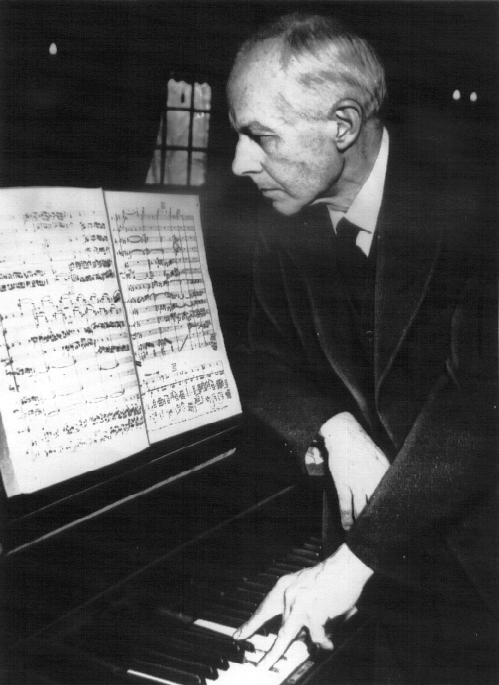
Showing posts with label SONATAS. Show all posts

Lennox Berkeley Sonatina for guitar op.52

Sir Lennox Randal Francis Berkeley (12 May 1903 – 26 December 1989) was an English composer. This Sonatina op 52 is a work which is highly regarded by guitarists, and has become one of the most recorded of Berkeley’s works. Composed in 1957, the Sonatina was dedicated to Julian Bream, who gave its first performance at Morley College, London, on March 9 1958.

  WIKIPEDIA

VIDEO: From a recording session in the studio of Mozarteum University Salzburg, 21.9.2012 Tal Hurwitz, guitarist

JOHN FIELD Piano Sonata No 4 in B Major


John Field (26 July 1782 [?], baptised 5 September 1782 – 23 January 1837) was an Irish pianist, composer, and teacher. He was born in Dublin into a musical family, and received his early education there, in particular with the immigrant Tommaso Giordani. The Fields soon moved to London, where Field studied under Muzio Clementi. Under his tutelage, Field quickly became a famous and sought-after concert pianist; together, master and pupil visited Paris, Vienna, and St. Petersburg. Ambiguity surrounds Field's decision to remain in the Russian capital, but it is likely that Field acted as a sales representative for the Clementi Pianos. Field was very highly regarded by his contemporaries and his playing and compositions influenced many major composers, including Frédéric Chopin, Johannes Brahms, Robert Schumann, and Franz Liszt. Field is best known as the instigator of the nocturne, but there is evidence to suggest that this is a posthumous accolade. Although little is known of Field in Russia, he undoubtedly contributed substantially to concerts and teaching, and to the development of the Russian piano school. Notable students include Prussian pianist and composer Charles Mayer. See: List of music students by teacher: C to F#John Field.

 VIDEO: Piano Sonata No. 4 in B Major, H. 17A: II. Rondo: Moderato · Miceal O'Rourke Field: Piano Sonatas Nos. 1-4 ℗ 1990 Chandos Released on: 1990-05-01 Artist: Miceal O'Rourke Composer: John Field

Bartók - Piano Sonata BB 88

The Piano Sonata BB 88 (Sz. 80) is a piano sonata by Hungarian composer Béla Bartók, composed in June 1926. 1926 is known to musicologists as Bartók's "piano year", when he underwent a creative shift in part from Beethovenian intensity to a more Bachian craftsmanship It is tonal, but highly dissonant, using the piano in a percussive fashion. Underneath clusters of repeated notes, the melody is folk-like. Each movement has a classical structure overall, in character with Bartók's frequent use of classical forms as vehicles for his most advanced thinking. Musicologist Halsey Stevens finds in the work early forms of many stylistic traits that became more fully developed in Bartók's "golden age", 1934-1940. Bartók wrote Dittának, Budapesten, 1926, jun. at the end of the score. Ditta is the name of his second wife. A performance generally lasts around fifteen minutes. Bartók wrote the duration as ca. 12' 30" on the score. Bartok wrote this piece with an Imperial Bösendorfer (piano) in mind, which has extra keys in the bass (97 keys in total). The 2nd movement of the sonata calls for these keys to be played. Bartók had previously written a piano sonata in 1896, which is little known. -----Wikipedia

ON CD:    Change of Keys: One Piano, Three Keyboards - Haydn, Beethoven, Chopin, Schumann-Liszt, Debussy & Bartok [Steinbuhler DS]

VIDEO: Bela Siki, piano - Bartók - Piano Sonata BB 88 (Sz. 80) (1969)


HAYDN Piano Sonata in C Major

Composition Year 1794–95? The sonata was written for and dedicated to Therese Jansen Bartolozzi c. 1794. Jansen Bartolozzi subsequently published the sonata c. 1800 with the title: "A Grand Sonata for the Piano Forte Composed Expressly for and dedicated to Mrs. Bartolozzi by Haydn ... Op. 79 ... London. Printed for, and to be had of the Proprietor 82 Wells Street and of the Publishers J. and H. Caulfield 36 Picadilly.

  WIKIPEDIA

VIDEO: Michail Markov - Haydn Sonata C Major - Hob. XVI / 35

Carlo Antonio Campioni, Sonata Op 1 No 2

Carlo Antonio Campioni (November 16, 1720 – April 12, 1788), also known as Carlo Antonio Campione or Charles Antoine Campion, was an Italian composer, as well as a collector of early music. Campioni was born in Lunéville in France. Not much is known about his education in music. Anton Raaff believes Campioni studied violin with Giuseppe Tartini in Padua. From 1763 until his death, he was maestro di cappella to the Grand Duke of Florence. He died in Florence. He wrote music in a variety of forms, but was particularly prolific in instrumental music, publishing several sets of trio sonatas. A setting of the Salve regina is his only published work of sacred music, though he did write more sacred works, such as Requiems for Franz I and Maria Theresa, and a Te Deum celebrating the birth of Francis II. The music of Campioni circulated in Europe in many different editions and combinations. To this day, a catalogue of Campioni's music put together by at-the-time Ambassador Thomas Jefferson is useful to musicologists in studying Campioni's oeuvre.

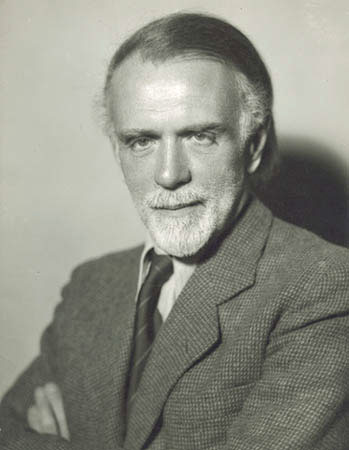
Johann Christian Bach, Sonata in D B. 36

Johann Christian Bach (September 5, 1735 – January 1, 1782) was a composer of the Classical era, the eleventh surviving child and youngest son of Johann Sebastian Bach. He is sometimes referred to as "the London Bach" or "the English Bach", due to his time spent living in the British capital, where he came to be known as John Bach. He is noted for influencing the concerto style of Mozart.

SONATA IN D MAJOR, B.36 for two violins and basso I. Allegro assai II. Allegro grazioso WIKIPEDIA

 VIDEO: Live video recording from the NC HIP festival in Durham. February, 2016. The Vivaldi Project Elizabeth Field and Allison Edberg Nyquist, violins Stephanie Vial, cello.

KODALY Sonata for Solo Cello, Op 8 (1915)

The Hungarian composer Zoltán Kodály wrote his Sonata in B minor for solo cello, Op. 8, in 1915. It was first performed in 1918 and published in 1921. It is among the most significant works for solo cello written since Johann Sebastian Bach's Cello Suites. It contains influences of Debussy and Bartók, as well as the inflections and nuances of Hungarian folk music. The sonata was written in 1915 but its premiere was delayed due to World War I. It was premiered by Jenő Kerpely (1885–1954; sometimes seen as Eugène de Kerpely) in Budapest on 7 May 1918. Kerpely was the cellist of the Waldbauer-Kerpely Quartet, which had premiered the first four string quartets by Bartók. It was published by Universal Edition in Vienna in 1921. WIKIPEDIA

Kodály himself predicted that "in 25 years no cellist will be accepted who has not played it". Indeed, less than 40 years later, in 1956, the sonata was a set piece for the Casals Competition in Mexico City. But in the meantime it had to earn its recognition. George Neikrug's playing of it at his debut at the New York Town Hall in 1947 was the first American performance of the work for many years. The piece wavers between B minor and B major, and Kodály adjusted the two lower strings down a semitone (scordatura) to better evoke these tonalities and to extend the instrument's tonal, dynamic and expressive range. The Sonata for solo cello has been recorded many times, by cellists such as Erling Blöndal Bengtsson, Natalie Clein, Rohan de Saram, Antony Cooke, Gisela Depkat, Pierre Fournier, Alban Gerhardt, Matt Haimovitz, Frans Helmerson, Yo-Yo Ma, André Navarra, George Neikrug, Truls Mørk, David Pereira, János Starker, Yuli Turovsky, Alisa Weilerstein and Pieter Wispelwey. János Starker first played it for Kodály at the age of 15, in 1939, then again in 1967 shortly before the composer's death. Kodály told Starker: "If you correct the ritard in the third movement, it will be the Bible performance". Starker recorded it four times (1948, 1950, 1956 and 1970), the 1948 78-rpm recording winning a Grand Prix du Disque.

VIDEO: Zoltan Kodaly - Sonata for Solo Cello, Op. 8 (1915)
 

GRIEG Cello Sonata in a Op 36


 Edvard Grieg (1843-1907) usually gave the traditional musical forms a wide birth, seeking to express himself in lyrical images and with rhapsodic freedom. The Cello Sonata of 1883 was commissioned by the Leipzig music publisher Peters, but Grieg found more personal motivation by dedicating it to his cellist brother John. The premiere performance was given by John's teacher, the famous cellist and composer Julius Klengel, with Edvard at the keyboard. Along with the Piano Concerto and the third Violin Sonata, the Cello Sonata is one of Grieg's most full-blooded works. Yet instead of classical balance, Grieg aimed at seething emotional expression -- passions reflected in both extremes of tempo and radiant, singing themes and folk song motifs. Edvard Grieg composed the Cello Sonata in A minor, Op. 36 for cello and piano, his largest chamber work, (and his only work for this combination) in 1882–83, marking a return to composition following a period when he had been preoccupied with his conducting duties at the Bergen Symphony Orchestra as well as illness. WIKIPEDIA

VIDEO: Anastasia Injushina piano, Jian Wang cello 

Debussy - Sonata for Cello and Piano in D minor


The Cello Sonata is a late work by the French composer Claude Debussy. It was the first of a planned series of 'Six sonates pour divers instruments', however Debussy only completed two others, the sonata for violin and the sonata for flute, viola and harp. The sonata for cello and piano was written in 1915, and is notable for its brevity, most performances not exceeding 11 minutes. It is a staple of the modern cello repertoire and is commonly regarded as one of the finest masterpieces written for the instrument. It is divided into three short movements.

VIDEO: Maurice Gendron - Violoncello Christian Ivaldi - Piano 1967, Paris
 

Dvořák: Sonata for violin and piano F dur, op. 57


Composed in 1880, when Dvořák was around 39 years old

 VIDEO: Barbora Valečková 

Chopin - Cello Sonata in G minor, Op. 65


The Cello Sonata in G minor, Op. 65, was written by Frédéric Chopin in 1846. It is one of only nine works of Chopin published during his lifetime that were written for instruments other than piano (although the piano still appears in every work he wrote). Chopin composed four sonatas, the others being piano sonatas. The cello sonata was the last of Chopin's works to be published in his lifetime. The sonata was written for and dedicated to Auguste Franchomme. The sonata is remarkable for the concentration of its material: much of the music of the first movement grows out of the cello’s opening statement, and certain theme-shapes appear in all its movements. The last three movements were first publicly performed by Franchomme and Chopin at the composer's last public concert, at the Salle Pleyel on 16 February 1848.

VIDEO: Maria João Pires, piano Pavel Gomziakov, cello 2008 

Rachmaninov Cello Sonata g op 19


 Sergei Rachmaninoff's Cello Sonata in G minor, Op. 19, a sonata for cello and piano, was completed in November 1901 and published a year later. Rachmaninoff disliked calling it a cello sonata because he thought the two instruments were equal. Because of this, it is often referred to as Sonata in G minor for Cello and Piano. Most of the themes are introduced by the piano, while they are embellished and expanded in the cello's part. He dedicated it to Anatoliy Brandukov, who gave the first performance in Moscow with the composer at the piano, on 2 December 1901. Rachmaninoff seems to have made some last-minute alterations after the premiere, as he wrote the date "12 December 1901" on the score. The sonata was overshadowed by the huge success of his Piano Concerto No. 2, which premiered on 27 October 1901.


VIDEO:  Sergei Rachmaninov sonata for cello and piano in g minor, Op.19 1.Lento, Allegro moderato 0:03 2.Allegro moderato 13:43 3.Andante 20:11 4.Allegro mosso 26:50 Natalia Gutman (cello) Viacheslav Poprugin (piano)


Schubert - Piano Sonata No. 20 in A major, D. 959


 The Sonata for piano in A major, D. 959 is part of the composer's last set of sonatas, written during the last months of his life, between the spring and autumn of 1828. The set was published ten years after his death, and mostly neglected during the 19th century. By the late 20th century, however, public and critical opinion had changed, and Schubert's last sonatas are now considered amongst the most important of the composer's mature masterpieces. They are part of the core piano repertoire, appearing regularly on concert programs and recordings.

 VIDEO: Christoph Eschenbach, 1974

Schubert Piano Sonata No 18 D 894 in G major


The Piano Sonata in G major D. 894, Op. 78 by Franz Schubert is a sonata for solo piano, completed in October 1826. The work is sometimes called the "Fantasie", a title which the publisher Tobias Haslinger, rather than Schubert, gave to the first movement of the work. It was the last of Schubert's sonatas published during his lifetime, and was later described by Schumann as the "most perfect in form and conception" of any of Schubert's sonatas.

 VIDEO: Franz Schubert Piano Sonata No 18 D 894 G major Alfred Brendel, piano
 

Brahms - Cello Sonata No.1 in E minor, Op. 38


The Cello Sonata No. 1 in E minor, Op. 38, actually entitled "Sonate für Klavier und Violoncello", was written by Johannes Brahms in 1862-65. Brahms composed the first two movements during the summer of 1862, as well as an Adagio which was later deleted. The final movement was composed in 1865. The sonata is actually entitled "Sonate für Klavier und Violoncello" (for Piano and Cello) and the piano "should be a partner - often a leading, often a watchful and considerate partner - but it should under no circumstances assume a purely accompanying role" It is dedicated to Josef Gänsbacher, a singing professor and amateur cellist. In the course of a private performance for an audience of friends, Brahms played so loudly that the worthy Gänsbacher complained that he could not hear his cello at all - "Lucky for you, too", growled Brahms, and let the piano rage on. It is "a homage to J. S. Bach" and the principal theme of the first movement and of the fugue are based on Contrapunctus 4 and 13 of The Art of Fugue. Brahms performed the sonata in Mannheim in July 1865 and then offered it to Breitkopf & Härtel, who turned it down. He had however also sent the sonata to Simrock describing it, in one of the most mendacious statements made by a major composer about his own work, as "a violoncello sonata which, as far as both instruments are concerned, is certainly not difficult to play", and they published it in 1866. The work was championed in Europe and London by Robert Hausmann. In gratitude, Brahms dedicated his Second Sonata to Hausmann.

  WIKIPEDIA VIDEO: Jacqueline du Pre - cello Daniel Barenboim - piano 

Beethoven Sonata No. 1 in F Major, Op. 5 No. 1


Cello Sonatas No. 1 and No. 2 (Opus 5) were written by Ludwig van Beethoven in 1796, while he was in Berlin. While there, Beethoven met the King of Prussia Friedrich Wilhelm II, an ardent music-lover and keen cellist. Although the sonatas are dedicated to Friedrich Wilhelm II, Ferdinand Ries tells us that Beethoven "played several times at the court, where he also played the two cello sonatas, opus 5, composed for Duport (the King's first cellist) and himself". Although Jean-Pierre Duport was one of the King's teachers, it is now thought to have been his brother Jean-Louis Duport who had the honor of premiering these sonatas. In the early 19th century, sonatas for piano and instrument were usually advertised as piano sonatas with instrumental accompaniment. Beethoven's first violin sonatas, for instance, were published as "sonatas for piano with accompaniment by the violin." The cello sonata was especially so plagued, as it grew out of sonatas for continuo; as late as the beginning of the 19th century it was still common for the cello in cello sonatas to double the left hand of the piano part, with the piano right hand playing obbligato figurations and melodies. Beethoven, indeed, is credited with composing one of the first cello sonatas with a written-out piano part. WIKIPEDIA

VIDEO: Sonata No. 1 in F Major, Op. 5 No. 1, by Ludwig van Beethoven. Performed by Mitsuko Flynn, cello, and Francis Yun, piano, on February 20, 2011, at Ms. Flynn's Junior Recital, Montclair State University.

Debussy Sonata for violin and piano


The Violin Sonata in G minor, L 140, for violin and piano was composed by Claude Debussy in 1917. It was the composer's last major composition and the third work in what had originally been conceived as a cycle of six sonatas for various instruments (the first two being the cello sonata, L 135, and the sonata for flute, viola and harp, L 137). The work is notable for its brevity; a typical performance lasts about 13 minutes. The premiere took place on 5 May 1917, the violin part played by Gaston Poulet, with Debussy himself at the piano. It was his last public performance.

 VIDEO: Debussy-Sonata for violin and piano. David Oistrakh (violin),Frida Bauer (piano), 1972 TV Performance.


Handel Trio Sonata in C minor, HWV 386a


Year/Date of Composition 1717-19 (??) First Publication 1879 in Trio Sonatas, Op.2 (No.1a)

 VIDEO: Assemblee des Honnestes Curieux


Handel Trio Sonata in G minor No. 16, HWV 393


The trio sonata is a musical form that was popular in the 17th and early 18th centuries. Year/Date of Composition Handel Trio Sonata in G minor No. 16, HWV 393 was around1719 ca. First Publication 1879 in Trio Sonatas, Op.2 (No.8)

VIDEO: George Frideric Handel, Trio Sonata No. 16 in G minor, HWV 393 Cellos: Leonid Gorokhov & Laura van der Heijden Jupiter Chamber Orchestra, November 2011
 

Schubert Piano Sonata in B-flat, D. 960

WIKIPEDIA VIDEO: Zoltan Kocsis

Franz Schubert's last three piano sonatas, D. 958, 959 and 960, are the composer's last major compositions for the piano. They were written during the last months of his life, between the spring and autumn of 1828, but were not published until about ten years after his death, in 1838–39. Like the rest of Schubert's piano sonatas, they were mostly neglected in the 19th century. By the late 20th century, however, public and critical opinion had changed, and Schubert's last sonatas are now considered amongst the most important of the composer's mature masterpieces. They are part of the core piano repertoire, appearing regularly on concert programs and recordings.

Popular Posts