Synopsis of some of the most popular classical music compositions prepared for Internet radio's "a MUSIClassical Concert" at www.theClassicStation.com and www.ClassicalMusic.network
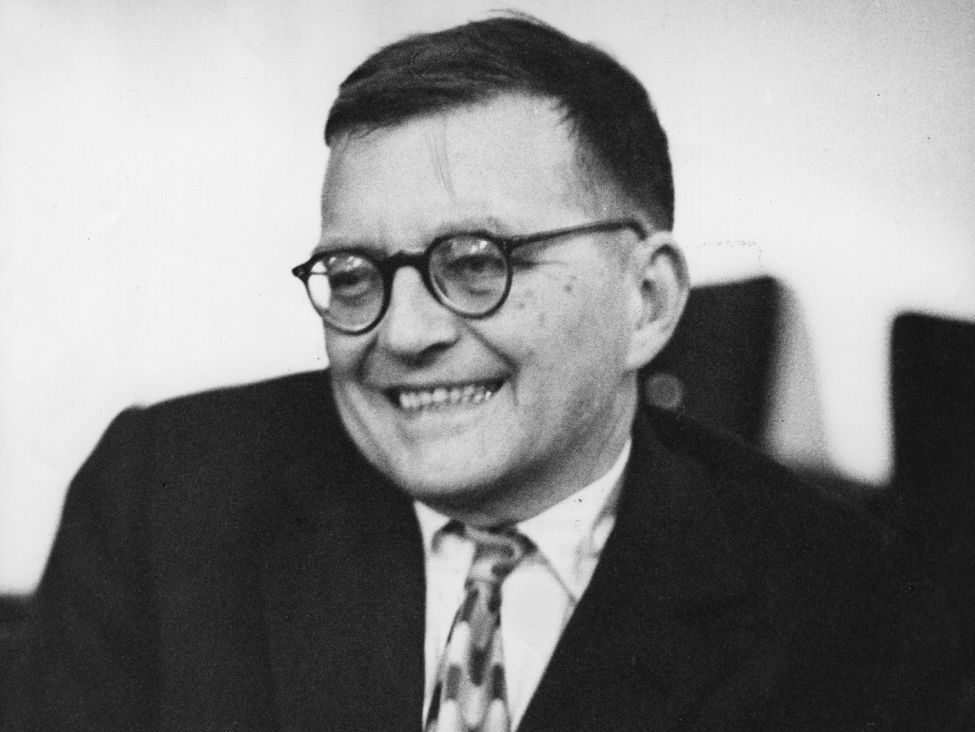
The Symphony No. 10 in E minor (Op. 93) by Dmitri Shostakovich was premiered by the Leningrad Philharmonic Orchestra under Yevgeny Mravinsky on 17 December 1953, following the death of Joseph Stalin in March of that year. It is not clear when it was written: according to the composer's letters composition was between July and October 1953, but Tatiana Nikolayeva stated that it was completed in 1951. Sketches for some of the material date from 1946.
This symphony was Shostakovich's first symphonic work since his second denunciation in 1948. It thus has a significance somewhat comparable to that of the Fifth Symphony in relation to the 1936 first denunciation. WIKIPEDIA
VIDEO: The Orchestra from Theatre Mariinsky
Conductor: Valery Gergiev
Salle Pleyel, Paris, 2013
Sergei Prokofiev wrote his Symphony No. 6 in E-flat minor (Op. 111) in 1947.
The symphony, written as an elegy of the tragedies of World War II, has often been regarded as the darker twin to the victorious Symphony No. 5 in B-flat major. Prokofiev said of the symphony, "Now we are rejoicing in our great victory, but each of us has wounds that cannot be healed. One has lost those dear to him, another has lost his health. These must not be forgotten."
The symphony was condemned in 1948 by the Soviet government under the second Zhdanov decree for not conforming to party lines, but it was favourably received among critics. ---(Wikipedia)
VIDEO: Recorded on 25 April 2012 at the Great Hall of the Moscow Conservatory.
Symphony Orchestra of the Mariinsky Theatre, St Petersburg / Valery Gergiev - musical director
The Sonata for piano in A major, D. 959 is part of the composer's last set of sonatas, written during the last months of his life, between the spring and autumn of 1828. The set was published ten years after his death, and mostly neglected during the 19th century. By the late 20th century, however, public and critical opinion had changed, and Schubert's last sonatas are now considered amongst the most important of the composer's mature masterpieces. They are part of the core piano repertoire, appearing regularly on concert programs and recordings. VIDEO: Christoph Eschenbach, 1974
Manuel María Ponce Cuéllar (8 December 1882 -- 24 April 1948) was a Mexican composer active in the 20th century. His work as a composer, music educator and scholar of Mexican music connected the concert scene with a usually forgotten tradition of popular song and Mexican folklore. Many of his compositions are strongly influenced by the harmonies and form of traditional songs.(ref. Wikipedia). Ferial, divertimento sinfonico is a depiction of an afternoon fair in a small town, is overtly national in style, dripping with local color.
Premiered by Orquesta Sinfonico de Mexico conducted by Carlos Chavez in August of 1940.
Manuel María Ponce Cuéllar (8 December 1882 – 24 April 1948) was a Mexican composer active in the 20th century. His work as a composer, music educator and scholar of Mexican music connected the concert scene with a usually forgotten tradition of popular song and Mexican folklore. Many of his compositions are strongly influenced by the harmonies and form of traditional songs.
In 1912 he composed his most famous work "Estrellita" (little star). "Estrellita", has been part of the repertoire of the main orchestras of the world and countless singers, although quite often the interpreter ignores the origin of the song as well as its author.
WIKIPEDIA