

Synopsis of some of the most popular classical music compositions prepared for Internet radio's "a MUSIClassical Concert" at www.theClassicStation.com and www.ClassicalMusic.network
Showing posts with label COMPOSERS-B. Show all posts
Showing posts with label COMPOSERS-B. Show all posts
BARBER Adagio for Strings


York Bowen - Violin Concerto (1913)

VIDEO: Lorraine McAslan, violin with Vernon Handley conducting the BBC Concert Orchestra
William Boyce (composer) (1711–1779), English-born composer and Master of the King's Musick
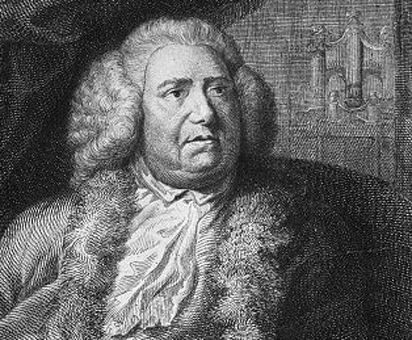
William Boyce (baptised 11 September 1711 – d. 7 February 1779) was an English composer and organist. Boyce is known for his set of eight symphonies, his anthems and his odes. Boyce was largely forgotten after his death and he remains a little-performed composer today, although a number of his pieces were rediscovered in the 1930s and Constant Lambert edited and sometimes conducted his works. His only son, also William Boyce (25 March 1764 – 1824), was a professional double bass player.[4] On the 7 February 1779 Boyce died from an attack of gout. He was buried under the dome of St Paul's cathedral. WIKIPEDIA
VIDEO: William Boyce - 8 Symphonies (The English Concert, Trevor Pinnock, 1987)
William Baines - Symphony in C-minor, Op.10 (1917)

VIDEO: Work: Symphony in C-minor, Op.10 (1917) Mov.I 00:00 Mov.II 09:44 Mov.III 20:17 Mov.IV 28:29 Orchestra: Airdale Symphony Orchestra Conductor: George Kennaway.
Lord Berners music for Luna Park, a ‘fantastic ballet in one act’

VIDEO: Lord Berners (Gerald Hugh Tyrwhitt-Wilson) (1883-1950): Luna Park, A Fantastic Ballet in One Act (1930) -- RTE Sinfonietta diretta da Kenneth Alwyn -- I. The Four Niches II. Adagio
Lord Berners: The Triumph of Neptune (1926)

Gerald Hugh Tyrwhitt-Wilson, 14th Baron Berners (18 September 1883 – 19 April 1950), also known as Gerald Tyrwhitt, was a British composer of classical music, novelist, painter and aesthete. He is usually referred to as Lord Berners. WIKIPEDIA
The Triumph of Neptune was written for Diaghilev’s Russian ballet to a harlequinade scenario by Sacheverell Sitwell. The choreography was by Balanchine, later director of the New York City Ballet. The cast included Danilova, Soklova, Lifar and Balanchine himself. There were waltzes, hornpipes, classical dances and spectacular scenes called ‘Cloudland’ or ‘The Frozen Forest’ (the latter known to the Lyceum stage hands as ‘Wigan by Night’). © Ronald Crighton
The Triumph of Neptune (10 tableaux; composed for Sergei Diaghilev, scenario Sacheverell Sitwell, choreography George Balanchine; 3 December 1926, Lyceum Theatre, London)
VIDEO: Lord Berners (Gerald Hugh Tyrwhitt-Wilson) (1883-1950): The Triumph of Neptune, balletto (1926) -- Clive Bayley, basso -- English Northern Philharmonia diretta da David Lloyd-Jones --
Don Banks (1923-1980) : Coney Island, for orchestra (c. 1960)

VIDEO: Don Banks (1923-1980) (Australie) Coney Island, for orchestra (c. 1960) Dir : Douglas Gamley
Alan Bush: Fantasia on Soviet Themes Op. 24 (1943)

WIKIPEDIA BIO
WORKS OF ALAN BUSH
VIDEO: Royal Scottish National Orchestra conducted by/ Real Orquesta Nacional Escocesa dirigida por Martin Yates.
Symphony No. 5 (Bax)

WIKIPEDIA | BAX Bio
Sir Arnold Edward Trevor Bax KCVO (8 November 1883 – 3 October 1953) was an English composer, poet, and author. His prolific output includes songs, choral music, chamber pieces, and solo piano works, but he is best known for his orchestral music. In addition to a series of symphonic poems he wrote seven symphonies and was for a time widely regarded as the leading British symphonist. Bax was born in the London suburb of Streatham.
VIDEO: Bryden Thomson, London Philharmonic Orchestra
Arthur Butterworth (1923-2014) : Symphony No. 6 (2006)

Arthur Eckersley Butterworth, MBE (4 August 1923, New Moston – 20 November 2014, Embsay)
WIKIPEDIA
VIDEO:
Lennox Berkeley: Divertimento in B Flat Major, Op. 18

WIKIPEDIA
VIDEO: Lennox Berkeley: Divertimento in B Flat Major, Op. 18 [Igor Buketoff-Royal Philharmonic Orchestra]. LP
Sir Arnold Bax - Symphony No. 7 (1939)

WIKIPEDIA
BAX BIO
VIDEO: London Philharmonic, Raymond Leppard
Arthur Butterworth "Symphony No.1"

VIDEO: Munich Symphony Orchestra, Douglas Bostock (Conductor) This is a hard-to-obtain Classico recording by Douglas Bostock and the Munich Symphony Orchestra of Butterworth's Symphony No.1
Arthur Bliss: Christopher Columbus Suite arr: Adriano


The Commission 3. Christopher Columbus (Suite): Do€a Beatriz 4. Christopher Columbus (Suite): Struggles 5. Christopher Columbus (Suite): The Messenger 6. Christopher Columbus (Suite): The Voyage begins 7. Christopher Columbus (Suite): Mutiny 8. Christopher Columbus (Suite): Land at last! 9. Christopher Columbus (Suite): Columbus put into chains 10. Christopher Columbus (Suite): Return to Spain
In the November/December 1949 issue of Film Music, the composer revealed in a more serious vein that he found the film extremely interesting from the musical standpoint, but that it was "difficult with American and English actors to suggest the atmosphere of Spain - that is what the music has to do - so I have tried using Spanish idioms, and tunes akin to those of Spain which convey the feeling and atmosphere of the age in which Columbus set forth from Spain". Bliss himself never made a suite of Columbus, though he allowed the Rank Organisation to issue a promotional 10" 78 rpm disc of The Voyage Begins and Return to Spain.
VIDEO: "Christopher Columbus - Suite: I. Alla polacca" by City of Birmingham Symphony Orchestra/Marcus Dods
Lennox Berkeley: Symphony No.2 (1958)

VIDEO: BBC National Orchestra of Wales, Richard Hickox
.
Bax - Symphony No. 1

WIKIPEDIA | BAX BIO
VIDEO: Royal Scottish National Orchestra - David-Lloyd Jones conductor
Arthur Butterworth (1923-2014) : Symphony No. 4 (1986)

VIDEO: Symphony No. 4 (1986) Dir : Bryden Thomson BBC Philharmonic Orchestra
Arnold Bax - Symphony No. 2 (1926)

Sir Arnold Edward Trevor Bax
(8 November 1883 - 3 October 1953)
....was an English composer, poet, and author. His prolific output includes songs, choral music, chamber pieces, and solo piano works, but he is best known for his orchestral music. In addition to a series of symphonic poems he wrote seven symphonies and was for a time widely regarded as the leading British symphonist. Bax completed his Symphony No. 2 in E minor and C major in 1926, after intermittent work for the previous two years. It was dedicated to Sergey Koussevitzky who, after protracted negotiations with Bax, conducted the first two performances in Boston with the Boston Symphony Orchestra on 13th and 14th December 1929. Eugene Gooseens conducted the first London performance with the Queen's Hall Orchestra on 20th May 1930. WIKIPEDIA
VIDEO: Conducted by David Lloyd-Jones with the Royal Scottish National Orchestra.
Arthur Bliss: Cello Concerto (1970)


Sir Arthur Edward Drummond Bliss CH KCVO (2 August 1891 – 27 March 1975) was an English composer and conductor. Bliss's musical training was cut short by the First World War, in which he served with distinction in the army. In the post-war years he quickly became known as an unconventional and modernist composer, but within the decade he began to display a more traditional and romantic side in his music. In the 1920s and 1930s he composed extensively not only for the concert hall, but also for films and ballet. Bliss continued to compose into his eighth and ninth decades, in which his works included the Cello Concerto (1970) for Mstislav Rostropovich.
VIDEO: Tim Hugh, violoncello English Northern Philharmonia diretta da David Lloyd Jones.
Lennox Berkeley Sonatina for guitar op.52

WIKIPEDIA
VIDEO: From a recording session in the studio of Mozarteum University Salzburg, 21.9.2012 Tal Hurwitz, guitarist
Subscribe to:
Posts (Atom)
Popular Posts
-
 Shostakovich's orchestral works include 15 symphonies and six concerti. His chamber output includes 15 string quartets, a piano quinte...
 -
 William Boyce (baptised 11 September 1711 – d. 7 February 1779) was an English composer and organist. Boyce is known for his set of eight...
 -
 The Waltz in D-flat major, Op. 64, No. 1, Valse du petit chien, popularly known as the Minute Waltz, is a piano waltz composed by Frédéric...
 -
 Piano Concerto No. 2 in F major, Op. 102, by Dmitri Shostakovich was composed in 1957 for his son Maxim's 19th birthday. Maxim pr...
 -
 William Baines (26 March 1899 - 6 November 1922) was an English pianist and composer. He wrote more than 150 works for solo piano and ...
 -
 Mikhail Mikhailovich Ippolitov-Ivanov (Russian: Михаи́л Миха́йлович Ипполи́тов-Ива́нов; 19 November [O.S. 7 November] 1859 – 28 January ...
 -
 William Alwyn CBE, born William Alwyn Smith (7 November 1905 – 11 September 1985), was an English composer, conductor, and music teacher...
 -
 William Alwyn CBE, born William Alwyn Smith (7 November 1905 – 11 September 1985), was an English composer, conductor, and music teache...
 -
 Brahms, Johaness SelectedWorks Johannes Brahms (7 May 1833 – 3 April 1897), was a German composer and pianist, and one of the leading musi...
 -
 Irish composer John Field was born in 1782 and died in 1837. He was the grandson of an Irish organist and the son of a violinist. His piano...